
A groundbreaking study, the State of the Florida Girl Report, has revealed significant challenges facing girls across the state, particularly in academics, physical health, mental wellness, and social well-being. The findings were unveiled on Jan. 29 at the Girl Scouts of Gulfcoast Florida headquarters in Sarasota, where CEO Mary Anne Servian underscored the urgency of addressing these issues.
“Through the commissioning of this report, we are taking critical steps toward understanding the challenges girls face in our communities,” Servian said. “We all know that girls are full of potential. But what this research confirms is that today’s girls are facing unprecedented struggles, especially in the wake of the COVID-19 pandemic. They are struggling in the classroom, in their relationships, and with their mental and emotional health.”
The report, commissioned by the Girl Scouts of Florida—a coalition of six councils serving girls statewide—analyzed publicly available data from reliable sources including the U.S. Census Bureau, the Centers for Disease Control and Prevention, and the Florida Department of Education. Through unpaid collaborations with peer reviewers in institutions of higher learning across the state of Florida, the areas of analysis and related charts and graphs were reviewed for themes, context, and unintended biases.
The report is available to read and download on the Girl Scouts of Gulfcoast Florida website.
The substantiated findings paint a troubling picture of gender disparities in key areas of well-being for Florida youth.

Among the most alarming findings:
- Girls in Florida are three times more likely than boys to experience sexual violence.
- One in six high school girls reported experiencing sexual violence in the past year.
- Twice as many girls seriously consider attempting suicide.
- More high school girls misuse controlled substances compared to their male peers.
- One in eight female students reported missing school due to safety concerns.
- More than half (52%) of high school girls reported symptoms of depression.
- High school girls are 1.5 times more likely than boys to vape or use nicotine, with nearly 20% engaging in these behaviors.
Servian emphasized that these findings demand action. “We are reaching out to schools, foundations, and elected officials to share this critical information,” she said. “We are meeting with state leaders and policymakers to advocate for stronger mental health support in schools and expanded access to after-school programs.”
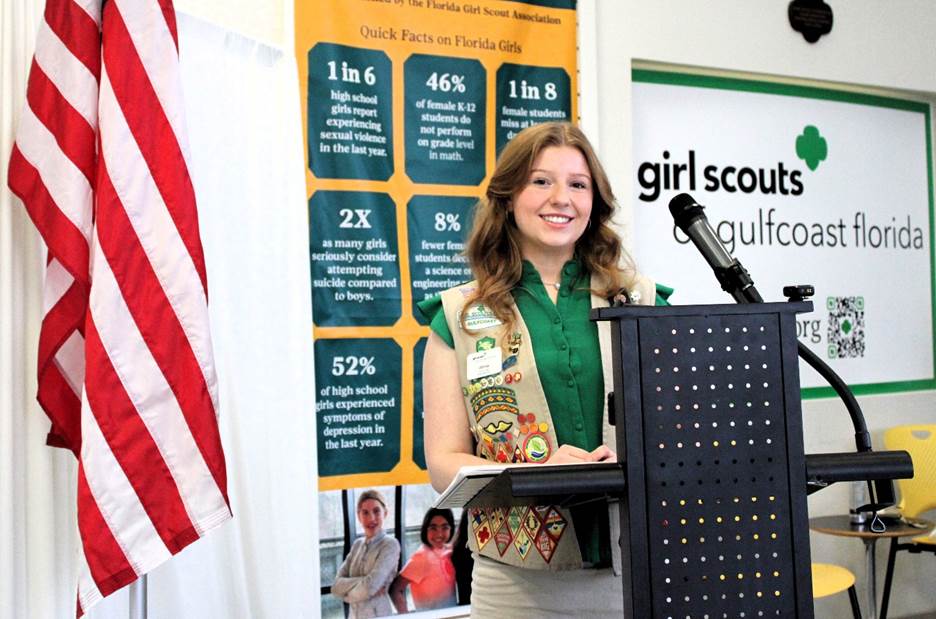
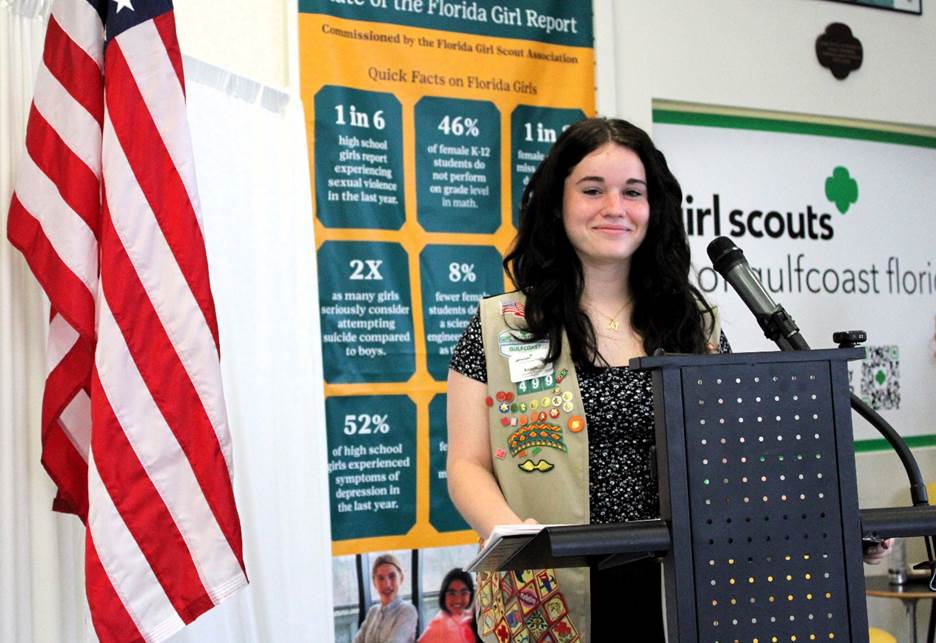
The Girl Scouts of Gulfcoast Florida will take their advocacy directly to Tallahassee in March, bringing Girl Scouts in grades 7-12 to the Florida Capitol. There, they will meet with legislators and discuss the pressing issues highlighted in the report.
The report also explored the root causes behind these challenges, pointing to the immense social pressures placed on girls. “Several troubling trends presented in the report fundamentally stem from unrealistic expectations,” the study noted. “From body image concerns to rising levels of anxiety and depression, girls are adapting to the damaging demands of social pressure.”
One of the report’s key recommendations is to provide girls with safe, supportive, single-sex environments—such as those offered through Girl Scouts. In girls-only settings, they feel safe to talk about issues they wouldn’t necessarily talk about with boys, try out new activities without a fear of failure, and experience less pressure to look or act a certain way.
“An all-girl environment presents better outcomes in mental health interventions and academic performance,” the report stated. “Girls benefit in deep, important ways from a supportive, all-girl setting that may not always be available through family or school.”
As Florida grapples with these findings, the Girl Scouts of Florida continue to push for systemic change, advocating for policies and programs that will empower girls and help them thrive.


 Girl Scouts of Gulfcoast Florida, Inc.