
Presidents’ Day is a time to honor and celebrate the leaders who have shaped the history of the United States. The role of First Ladies in contributing to the nation’s progress is often overlooked, but the contributions they have made to American culture and progress should not be forgotten. The First Ladies of the United States hold a unique connection with the Girl Scouts of the U.S.A.
As we celebrate Presidents’ Day, it’s essential to recognize the remarkable contributions of First Ladies to the Girl Scouts. From Lou Henry Hoover to Jill Biden, these women have left an indelible mark on an organization that empowers young girls and instills values that go beyond the political landscape. The connection between Presidents’ Day and the First Ladies’ support for the Girl Scouts is a testament to the enduring commitment to service, leadership, and community building in the United States.
Edith Bolling Wilson (1915-1921)
Edith Wilson became the first Honorary President of Girl Scouts in 1917. The tradition of the First Lady of the United States serving as Honorary President of Girl Scouts continues today.
Florence Harding (1921-1924)
Florence Harding, wife of the 29th president Warren G. Harding, strongly believed in the importance of physical exercise for women and organized a women’s tennis exhibition game at the White House courts. Her message to the Girl Scouts was characterized by a determined spirit, urging them to persist in overcoming challenges and to continue their important work regardless of any sacrifices that may be required.
Grace Coolidge (1924-1929)
Grace Coolidge, the wife of Calvin Coolidge, took on the honorary presidency of the Girl Scouts and regularly participated in the organization’s events while dressed in its official uniform. However, her main focus in her public work was on two specific organizations: the Red Cross and the Clarke School for the Deaf.
Lou Henry Hoover (1929-1933):
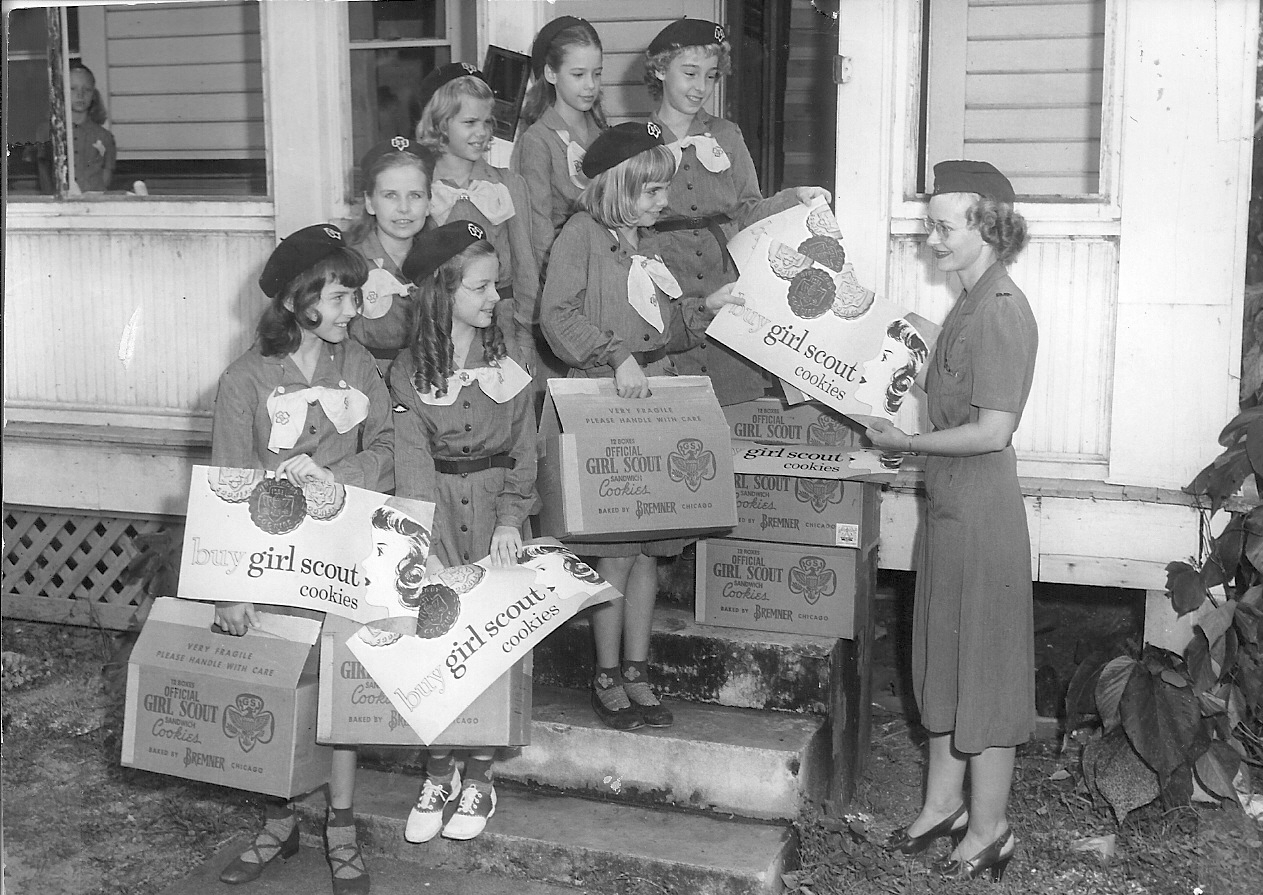
Lou Henry Hoover, the First Lady during the late 1920s and early 1930s, played a pivotal role in the Girl Scouts. Recruited by Juliette Gordon Lowe in 1917, Hoover served as the acting commissioner of the Girl Scouts in Washington, DC. Her engagement extended over decades, including two terms as Girl Scouts president. Notably, it was during her second term that the Girl Scouts approved a national plan to bake and sell cookies in support of scouting.
Eleanor Roosevelt (1933-1945):
Amidst the challenges of the Great Depression and World War II, Eleanor Roosevelt served as the honorary president of Girl Scouts from 1933 to 1945. Her commitment to the organization provided crucial support during turbulent times.
Bess Truman (1945-1953):
Bess Truman, who served as honorary president from 1945 to 1953, became a part of Girl Scout history by accepting the first box of Girl Scout cookies at the beginning of the cookie season.
Mamie Eisenhower (1953-1961):
As honorary president of the Girl Scouts, Mamie Eisenhower went beyond the ceremonial role, occasionally donning a Girl Scout uniform during her tenure as First Lady from 1953 to 1961.
Jacqueline Kennedy Onassis (1961-1963):
During her brief time as First Lady from 1961 to 1963, Jacqueline Kennedy Onassis served as the honorary president of Girl Scouts, leaving a lasting impact on the organization.
Lady Bird Johnson (1963-1969):
Lady Bird Johnson was first lady from 1963-1969, serving as the honorary president of Girl Scouts during those years. On March 12, 1962, when her husband, Lyndon B. Johnson, was vice-president, she celebrated the 50th anniversary of the Girl Scouts.
Pat Nixon (1969-1974):
Pat Nixon embraced the role of honorary president of the Girl Scouts from 1969 to 1974. Not only did she support the organization, but she also actively led her daughters’ Girl Scout troop.
Betty Ford (1974-1977):
On August 11, 1976, Betty Ford became the 11th honorary president of the Girl Scouts, contributing to the organization during her time as First Lady.
Rosalynn Carter (1977-1981):
Rosalynn Carter served as the honorary president of the Girl Scouts from 1977 to 1981, marking the 65th anniversary of the organization’s founding with a special reception.
Nancy Reagan (1981-1989):
Nancy Reagan, the iconic First Lady from 1981 to 1989, took on the role of honorary president of the Girl Scouts. In 1985, educational resources on contemporary issues, including the “Just Say No to Drugs” campaign, were released at a tribute luncheon in her honor.
Barbara Bush (1989-1993):
Barbara Bush eagerly accepted the invitation to be the honorary president of the Girl Scouts and actively participated in various events. She spoke at the Girl Scouts’ 80th birthday celebration in 1992.
Hillary Rodham Clinton (1993-2001):
As the honorary president of the Girl Scouts from 1993 to 2001, Hillary Rodham Clinton brought her childhood experiences as a Girl Scout and her dedication to the organization. In 1996, she participated in a Girl Scouts smoking prevention event at the White House.
Laura Bush (2001-2009):
Laura Bush, First Lady from 2001 to 2009, served as the honorary president of the Girl Scouts. Her childhood memories of being a Girl Scout in Midland, Texas, influenced her commitment to the organization.
Michelle Obama (2009-2016):
Michelle Obama enthusiastically embraced the honorary role of president of the Girl Scouts. Her ongoing work with the Becoming Me program reflects a partnership among Girl Scouts, Penguin Random House, and Mrs. Obama. The program is based on Michelle Obama’s book, Becoming: Adapted for Young Readers, and includes journaling activities designed to help girls reflect on their lives.
Melania Trump (2016-2020):
In 2016, Girl Scouts made history by marching in the inaugural parade for then President-elect Donald Trump. Throughout Trump’s presidency, Girl Scouts were frequently invited to speak at White House events, underscoring the organization’s significant role in shaping national conversations and inspiring future leaders. This dynamic relationship between the Girl Scouts and the White House further highlights the enduring impact of the organization and its commitment to fostering leadership and civic engagement.
Jill Biden (2020-Present):
The current First Lady, Jill Biden, was a Girl Scout, continuing the legacy of First Ladies’ involvement with the organization.
“I have no doubt that the girls of today will become the leaders and change-makers of tomorrow. Supporting them, empowering them and ensuring they have the opportunities they deserve is good for all of us,” said Dr. Jill Biden. “My Girl Scout experience taught me confidence, perseverance, and gave me skills that inspired me to pursue public service and helped me become a better leader. Girl Scouts is the preeminent organization that gives girls the place and the opportunity to develop their powerful voices.”
As we celebrate Presidents’ Day, it’s essential to recognize the remarkable contributions of First Ladies to the Girl Scouts, as well as the active participation of Girl Scouts in historical events. From Lou Henry Hoover to Jill Biden, these women and girls have left an indelible mark on an organization that empowers young girls and instills values that go beyond the political landscape. The connection between Presidents’ Day and the First Ladies’ support for the Girl Scouts is a testament to the enduring commitment to service, leadership, and community building in the United States.



 Girl Scouts of Gulfcoast Florida, Inc.